An article written by Dawn Hart from YogaSherborne
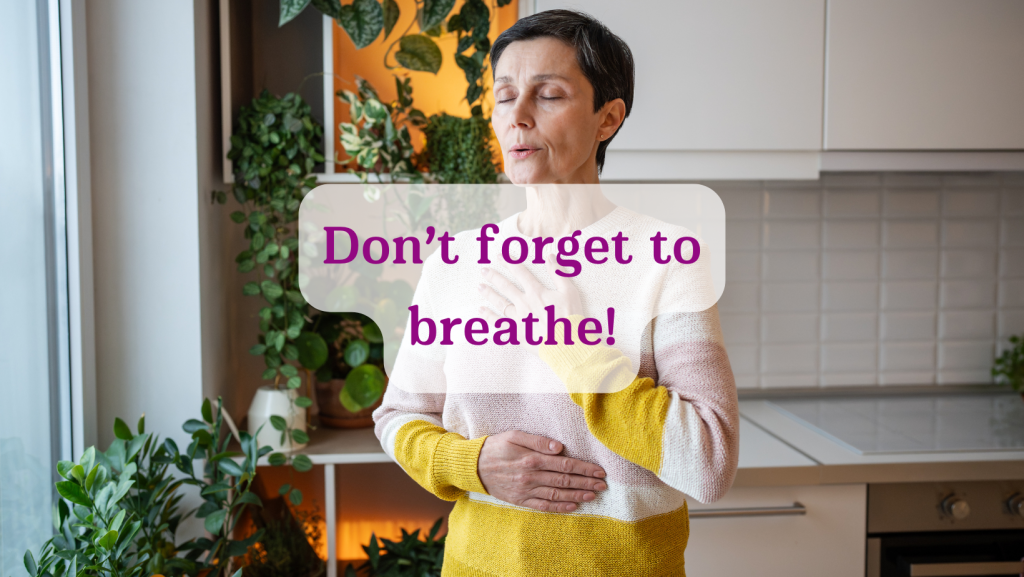
Maybe an obvious reminder but something you hear regularly in many yoga classes. If you are concentrating on which left, right, leg or arm you should be moving, where to look while you do it and how long to hold… it’s no surprise you suddenly realise you’ve been holding your breath!
Good breathing in yoga means breathing fully and rhythmically, making the most of your lung capacity. Yoga breathing or Pranayama teaches us how to recharge the body drawing in more oxygen and more fully purging the lungs of carbon dioxide. Yoga tradition describes Prana or life force a topic needing more depth than we have space for here. At the same time these exercises can help control our mental or emotional states by calming the sympathetic nervous system; reducing anxiety and tension.
However some of these breathing exercises can appear daunting. Often we need to get to know our own breathing a little better first. Our brains make sure we breathe without us having to think about it. Very useful indeed but in this busy world it does mean that we have lost some awareness of our own breathing. Being able to slow and deepen the breath has become something we have to work at. By linking breathing to our movement we can restore some awareness. This is central to the style of Hatha Yoga that I teach and the following exercise can help you whether you are on a yoga mat or not.
- To begin sit either on the floor or on a chair with your feet flat on the floor. In both cases make sure your back is comfortably straight and your shoulders relaxed, opening up your chest. Rest your hands on your lap or at your side.
- Now rest your attention on your breathing. If it is comfortable breathe in and out through your nose otherwise use your mouth.
- Notice the inhalation and the exhalation to begin with.
- Perhaps the air is cool when it enters and slightly warmer when it leaves.
- Notice which parts of your body move when you breathe, maybe the chest or lower abdomen.
- Now notice the sound.
- Then notice there is a slight pause after the inhalation and another after the exhalation, just before you inhale again.
- Don’t try and control it, just let your body breathe and be an observer.
- Keep your attention here for 1 or 2 minutes, set a timer if that helps.
You can now experiment moving your arms in time with your breath. This is a simple exercise but can really help energise your body, helping you breathe more fully. As well as some bonus tension relief for the shoulders.
If you experience any lightheaded feeling, discomfort or feel unwell, stop. Rest and return to observing your breathing again.
- Standing or sitting with good posture. Begin with your arms relaxed down by your side.
- As you inhale, lift them out to the side and up bringing the palms gently together above your head.
- Your hands should meet just as you finish the inhalation.
- Hold the breath in briefly as you turn your hands so the palms now face outwards.
- As you exhale, lower your arms back down to your sides. Draw the fingers back as you do gently pushing through the wrists. You are aiming to get some tension through the arms without straining.
- Your arms should reach your sides just as you finish the exhalation.
- Repeat 3-4 times. Focus on making the movement and your breath line up.
- Once you have found your rhythm and if you are comfortable you can practise for up to 1 minute.
To begin with you may move quite fast so try slowing the movement and keep your breath in time with that movement. Notice how much deeper you can breathe as you slow down. Never slow so much that you feel uncomfortable.
At the start of every class we ease out the neck and shoulders in time with our breathing like in the exercise here. We are warming up muscles helping to prevent injury when we begin to move more fully, but also preparing our minds. As you slow your breathing, tension eases. This makes it easier to focus your mind when you move into postures, either to hold them or move into a faster flow. If you can find this connection even for part of a class it can have a powerful affect, on your physical strength and your stress levels.
My job is to give structure a bit like a pacemaker. It is easier to notice if your movements are fast when you have someone calling out the rhythm. It doesn’t mean my pace is perfect for you but it gives you a base to work from. As you become familiar with postures and routines you are able to breath and move together more naturally. You may still get your left and right mixed up but at least you stay relaxed when you do!
This also works off the mat. You may be able to bring it into your day as you walk, in the shower or stirring soup in the hob. It really doesn’t matter where or when, just see if you can become a little more aware of the connection and see where it takes you.